
Why Literature in History is Important and How it is Often Neglected
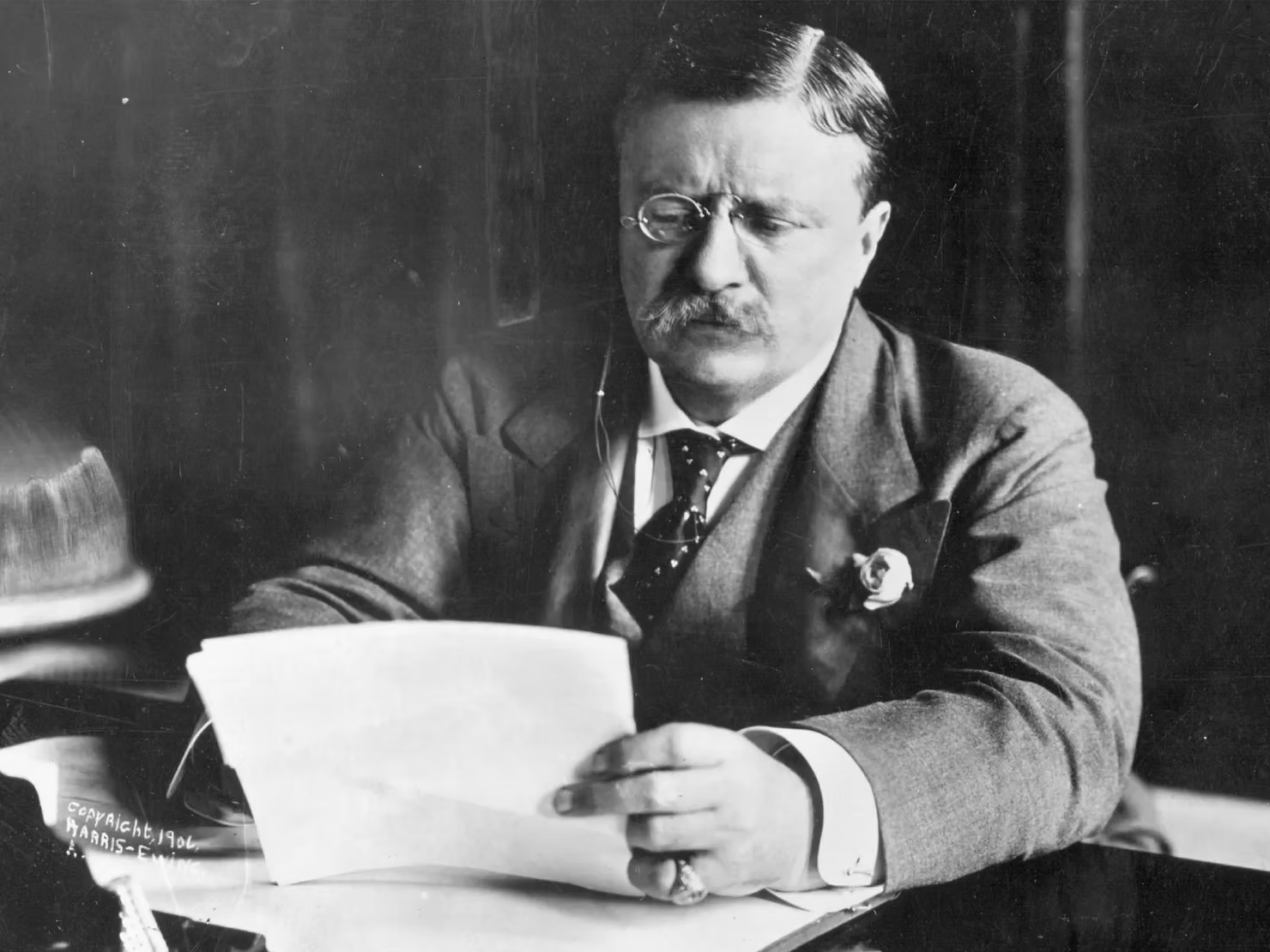
‘Writings are useless unless they are read, and they cannot be read unless they are readable.’ That is what Theodore Roosevelt told his audience in a lecture he gave at the University of Oxford, in which he explained the importance of literature in history. In it, he explains the misconception that people, especially academics, have about history, which still rings true more than a century after he gave his lecture. But why is literature in history so important, and how is most history seen today? These are the probing questions Roosevelt tries to answer in his lecture. Here are its most important concepts:
Why Literature in History is Important
Writings are useless unless they are read. The reason for this is because literature is about spreading ideas. There is little value in developing an idea, writing it down, perhaps writing an essay or even an entire book about it, and then having no one read it. The primary purpose of writing is to share your ideas with others, allowing them to be influenced and potentially changed by your perspective.
The problem is that when what you write is not interesting to read, not many people, if any, will read it, and as a result, the spread of your ideas is severely limited. This is the main reason that history as literature is so important: because history is written to be shared, or else it is useless. When what you write is good literature, it makes it more pleasurable to read, even for people outside of the field you’re writing about, which means more of those people will read your stuff. There are, of course, different use cases for different ideas. Some writings are meant for a specialized group in a certain field, those do not have to be as accessible, they only have to be accessible enough for those you write for. But history is often a different story, and in this literature becomes especially important. The purpose behind spreading the lessons of history, is that anyone can learn from them, preferably as many people as possible. But when you make history inaccessible for most normal people to read, history loses most of its value. Ideas won’t be spread, lessons won’t be learned, and your writings will therefore not be as useful as they could be.
The impact good literature can have on the spread of ideas is best exemplified in the works of Charles Darwin. Everyone knows about his theory of evolution, and his ideas have changed the way most people think about the world. But why was this possible? Because his ideas spread like wildfire because of their readability, the works of Darwin were simply good literature in addition to being full of revolutionary ideas. Soon, every bookcase in every home had the works of Charles Darwin in it, and with its popularity, its ideas spread around the world, making a giant impact. There are tons more examples of ideas spreading and making an impact because they were good literature, from Thomas Paine’s Common Sense that influenced thought during the American Revolution, to Winston Churchill’s works about the Second World War that shaped the way we still look at that conflict. All influenced the minds of millions of people and even history itself, all because they were good literature.
“But the historical work which does possess literary quality may be a permanent contribution to the sum of man’s wisdom, enjoyment, and inspiration.”
What History has Become
Since the scientific revolution, there has been a tendency to look at every academic discipline as a science, including history. Universities that teach history have become obsessed with the science of it and often tend to neglect the importance of good literature. The result is that most history becomes a conglomeration of facts and data, and these in themselves are extremely boring to the average reader. That’s why academics often only write for other academics to supply only their own field with new ideas, no one else wants or often can read them. This is not a problem in itself because it enhances the understanding of these academics about a certain historical subject, but it doesn’t enhance the understanding of these subjects for normal people. For the average reader, academic and scientific works are difficult to get through and often boring, so they will never read them. This means that these ideas are not reaching any average people, and history becomes a closed-off subject that only academics have access to.
History also becomes boring to people in general because there’s not enough good and readable literature being pushed out into the world due to the focus on boring academic publications. Knowledge about history is already lacking in every society today, and the academization of history doesn’t help in combating this problem. On the contrary, history becomes more and more inaccessible to people because of this, and more people have inadequate knowledge of history and its lessons, leading to massive problems for society down the road.
One of the reasons most academic history is unreadable for the general public is because of the belief academics have about what good history is and how it is written. They believe that historic writing should be serious and dry and that color or vividness in writing is a sign of bad or nonfactual history. Indeed, they are correct in the principle that truthfulness should never be sacrificed for good literature. Even if you write in a good, compelling, and readable manner, everything you say should always be based on facts. But facts do not have to be dry and boring to be true; writing vividly about an event as if you and the reader were there is fun to read and can be based solely on facts. The misconception academics make is that this is impossible, they believe that when a piece is true, it has to be dry and it can’t have any vividness, color, or excitement, and so good literature is often written off because of its readability in academic circles.
In fact, Roosevelt makes the argument that true accuracy in writing history comes from those authors ‘in whom the imaginative gift is strong’. People will write more accurately about a historical event if they can imagine themselves to have been there, if they can feel the atmosphere, see the objects surrounding them, and hear the people in the streets. If they can imagine this and capture this imagination, they can transport this to paper, and the reader can get a glimpse into the feeling of the event. The important point is that it doesn’t have to be false for it to be colorful.
“They feel that complete truthfulness must never be sacrificed to color. In this they are right. They also feel that complete truthfulness is incompatible with color. In this they are wrong.”
The Importance of Both Types of History
Making the argument for seeing history more as literature does not mean that the science of history is bad or that history shouldn’t be looked at in that way at all, that’s not the point Roosevelt is making. As a matter of fact, history as a science is extremely important. Literature about history needs to be readable, as we’ve established, but for it to be useful, it must also be accurate, and only scientific history can provide this accuracy. The academics who research history provide us with the cold hard facts, and these facts can be used by good writers to make readable history. Without the scientific history, there can be no accurate literary history.
But the point that Roosevelt tries to make is that neglecting the literature aspect of history means neglecting the most important reason we study history. The lessons and stories of history are there to be shared with the public, but for those ideas to reach a wide audience, the works need to be readable. History without literature is useless, and history without science is inaccurate, you need both. Scientific history provides the message, literature is the messenger. Without the message, there is no reason to have a messenger, but without the messenger, there is no way of getting the message out. The only point Roosevelt makes is that history as literature should not be neglected and its importance must be understood, or else history becomes a science that only academics exercise, but has no use in the real world, when in reality history has immense practical value and people would do good to learn lessons from it.
“In short he must have the power to take the science of history and turn it into literature.”
Read the full lecture by Theodore Roosevelt here: